
The Billboard vs. The Neighborhood: Advertising Strategies for Your Assisted Living Facility
Running an assisted living facility is a demanding job. Between managing daily operations and responding to sudden regulatory changes—like new emergency generator mandates—it’s easy to let marketing fall by the wayside. But if you want to keep your beds full, you have to treat advertising with the same level of attention as your operations.
For many new facility owners, this is their first time running a business, and navigating the world of advertising can be overwhelming. Here is a breakdown of how to think about advertising your assisted living facility and where to best allocate your budget.
Location Dictates Your Need for Advertising
Think of your facility’s location like retail spaces.
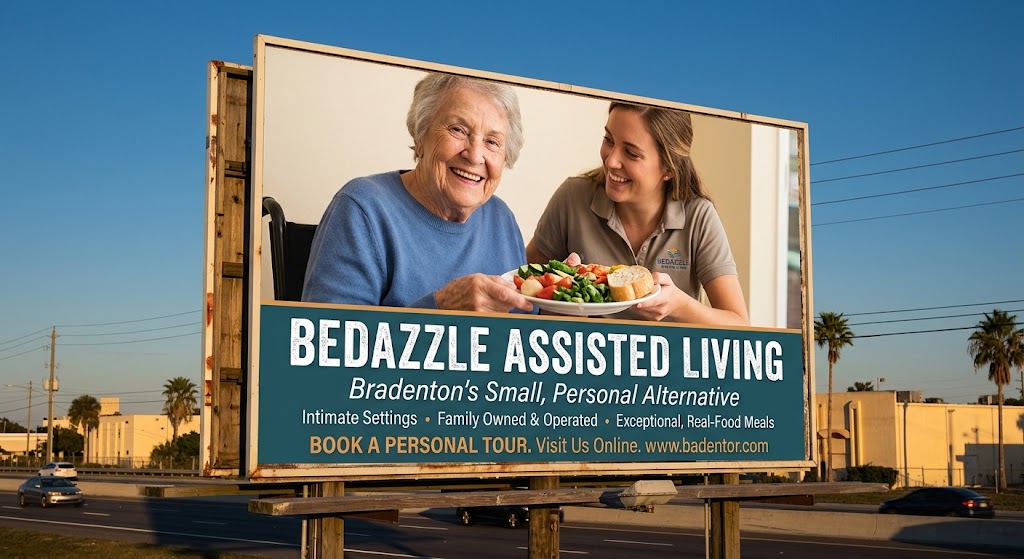
If your assisted living facility is located on a busy commercial road, it’s the equivalent of having a store inside a popular shopping mall. You benefit from built-in foot traffic and high visibility. People drive by, see your sign, and inherently know you are there.
However, if your facility is a smaller, residential-style home tucked away deep inside a quiet neighborhood, you are invisible to the general public. Because you don’t have that “mall traffic,” you have to work twice as hard to get the word out. That is where a solid advertising strategy comes into play.
Beware of the “Quick Fix” Sales Pitch
The moment you open your doors, you will be bombarded by salespeople. They will call you pitching digital ads, Yellow Pages placements, local savings books, refrigerator magnets, and mailers. They will all sound like experts, promising that their specific product is the silver bullet to fill your facility.
You must be highly strategic with your money. For example, if you have a strict marketing budget of $300 a month, placing one $300 ad in a senior newspaper is a risky gamble. Yes, if that ad brings in one resident, it pays for itself. But if it doesn’t, your entire budget is gone with nothing to show for it.
You cannot bank your entire occupancy on a single ad. You need a diversified strategy.
Placement Services vs. Brand Building
Many facilities rely heavily on third-party placement services. The appeal is obvious: you don’t pay anything upfront, and you only pay when they bring you a resident. However, that fee is often equivalent to one full month’s rent.
While placement services are a valid part of a diverse marketing strategy, relying on them exclusively is a mistake. When you use a placement service, they are the ones building their brand—not you. They will get the future calls.
Conversely, when you spend money on your own consistent advertising, you are building your brand equity. Someone might see your ad, clip it out, and save it on their fridge for two years until they need your services. When you advertise for yourself, you get the residual, long-term benefits.
Strategic, Low-Cost Advertising: The Church Bulletin
If you are working with a limited budget, you need to find highly targeted, low-cost avenues to spread your message. One of the best, most overlooked strategies is advertising in local church bulletins.
Depending on the size of the congregation, these ads are often very inexpensive. More importantly, churchgoers tend to be a highly engaged audience that reads the bulletin front-to-back every week.
To maximize this strategy, don’t just place the ad and walk away. Get involved. Host a fundraiser for the church, sponsor an event, or participate in community outreach. When families are faced with the incredibly emotional decision of placing a parent in assisted living, they don’t want to just call a random phone number from an ad. They want a connection. By pairing a bulletin ad with real-world community involvement, families begin to associate your face and your heart with your facility’s name.
The Bottom Line
A single ad won’t save a struggling facility. A full house is the result of a diverse, consistent marketing strategy. Build a realistic budget, spread it across digital ads, local community placements (like church bulletins), open houses, and networking events. Over time, that consistency will build the trust and community awareness needed to keep your facility thriving.